Enzyme Supplier Contact: Use EnzymeB2B for Industrial Formulations
Contact enzyme suppliers, request quotes, compare COA/TDS/SDS data, and validate industrial enzymes for cost-in-use and process fit.
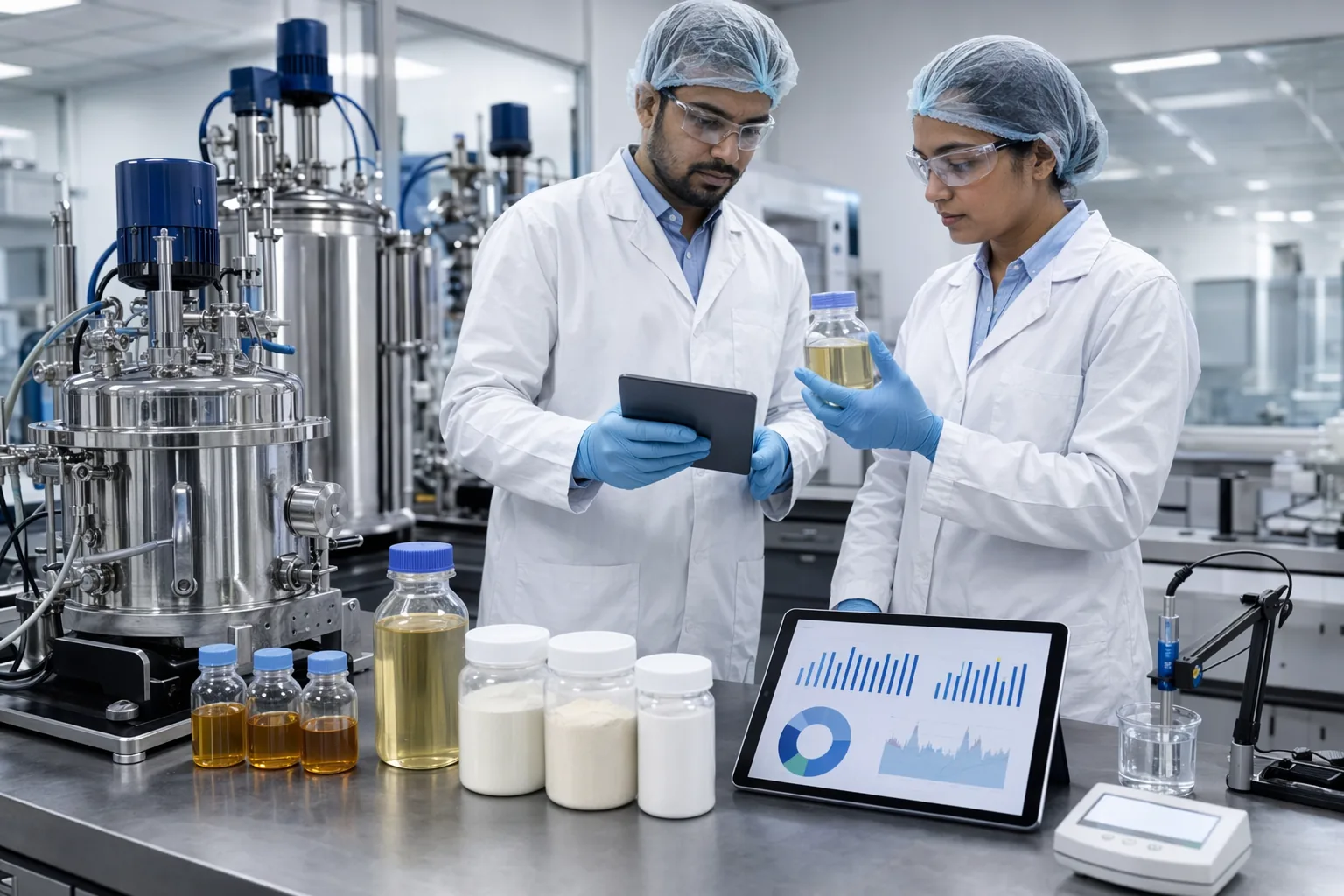
Find, compare, and contact industrial enzyme suppliers with the technical documentation, formulation data, and quote details needed for B2B procurement decisions.
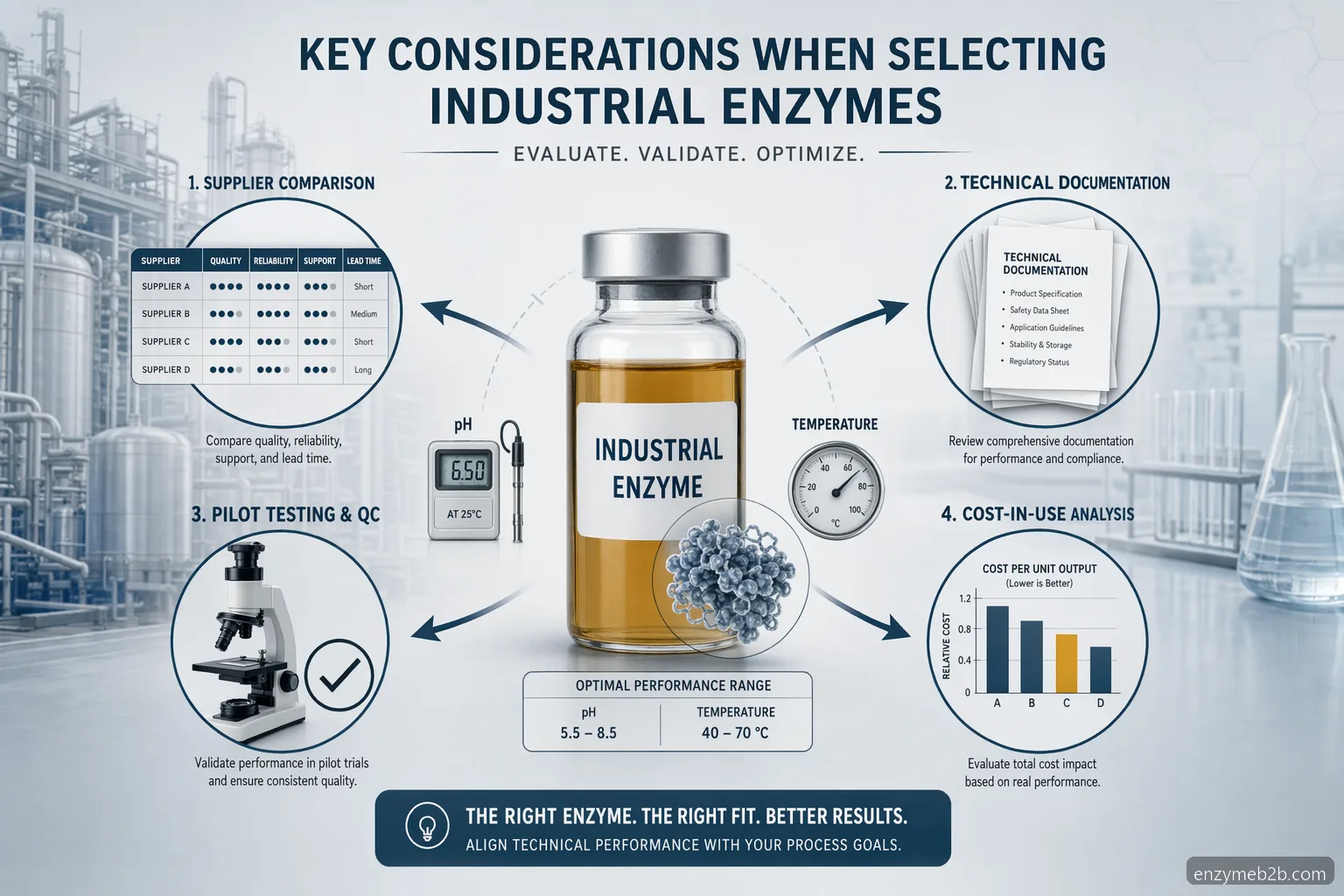
Why Supplier Contact Quality Matters
A strong enzyme supplier contact request helps technical teams respond with the right product instead of a generic catalog suggestion. Industrial enzymes are highly application dependent: a protease enzyme supplier may offer multiple grades with different pH profiles, temperature stability, salt tolerance, carriers, and activity units. For general industrial formulations, describe the substrate, target reaction, process pH, operating temperature, residence time, water activity, preservatives, surfactants, and downstream heat or pH kill step. Include whether the formulation is liquid, powder, slurry, or granule. Buyers using EnzymeB2B can contact enzyme suppliers with a consistent brief, request comparable data, and reduce back-and-forth before sampling. This is especially important when sourcing from a high activity enzyme supplier, an enzyme ingredient supplier, or a kosher halal enzyme supplier where documentation and handling requirements can influence qualification.
State the enzyme class and target function. • Share operating pH, temperature, and process time. • Request COA, TDS, SDS, and sample availability. • Ask for activity unit definition and test method.
Process Conditions to Share Before a Quote
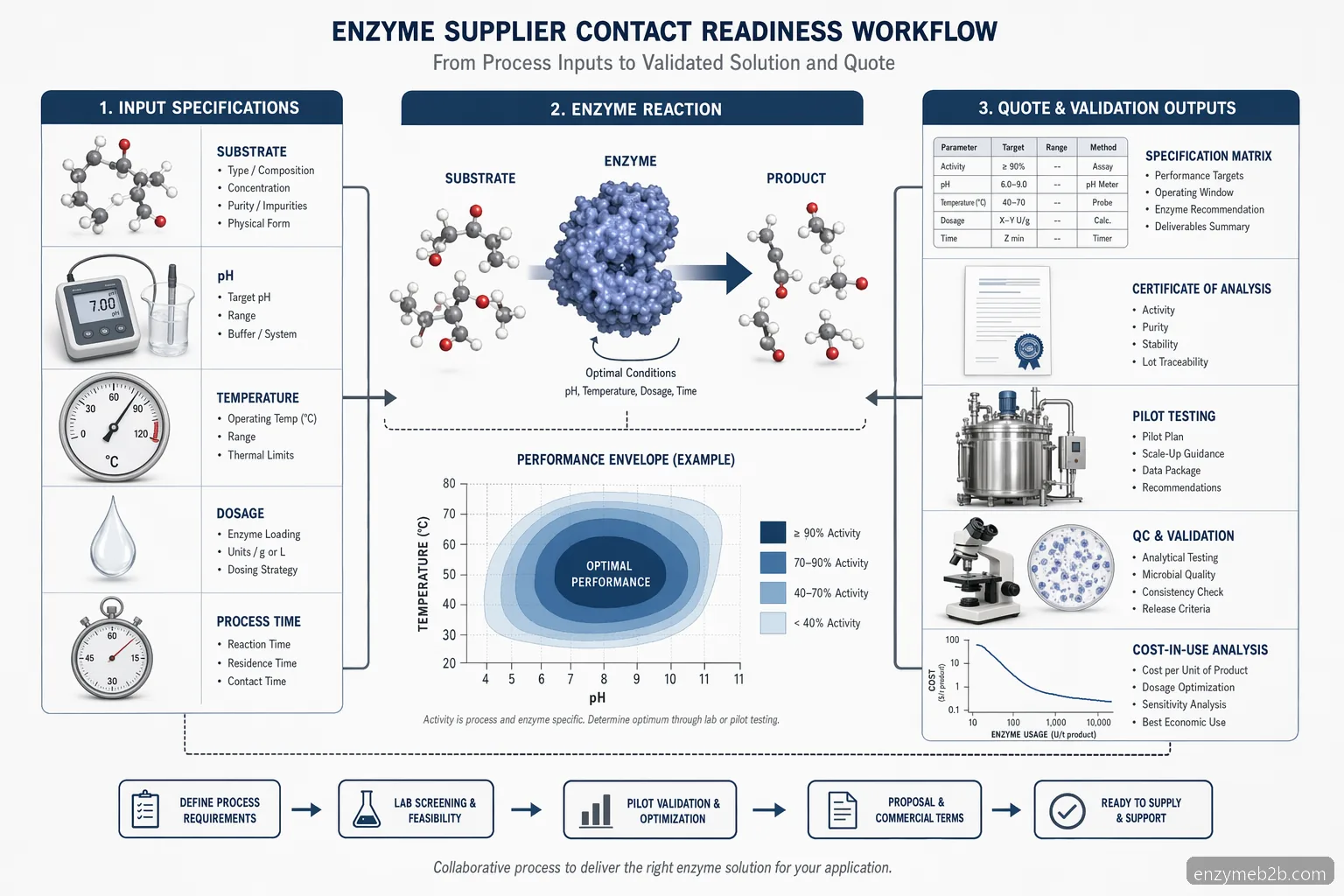
For an accurate enzyme supplier quote request, provide realistic process conditions rather than only an enzyme name. Many proteases operate effectively around pH 6.0 to 10.5, with common processing temperatures from 35°C to 60°C, but actual performance depends on the enzyme source, stabilizers, substrate, and exposure time. Amylases may be selected for moderate or high temperature starch conversion, while lipases, cellulases, and specialty enzymes require their own pH and temperature window. Initial dosage screening often starts around 0.01% to 0.5% by formulation weight or 50 to 2,000 ppm active preparation, then narrows by activity response and cost-in-use. If your process includes chelators, oxidizers, solvents, high salt, or surfactants, disclose them early. The supplier can then recommend a suitable grade, liquid or powder format, and validation plan.
pH range: current, target, and allowable adjustment. • Temperature: hold time, peak temperature, and cool-down profile. • Dosage: current use rate or desired screening band. • Matrix: salts, detergents, oils, solvents, or preservatives.
Documents to Request from an Enzyme Supplier
Documentation is central to supplier qualification. A technical data sheet should identify enzyme type, activity range, recommended operating conditions, appearance, solubility or dispersibility, storage guidance, and shelf-life. A certificate of analysis should match the lot offered and list activity, microbiological limits where applicable, moisture or solids, and other release tests used by the manufacturer. The safety data sheet should support handling, storage, PPE review, and transportation classification. For food-related uses, buyers may also request allergen statements, GMO-related statements, country of origin, traceability details, and documentation supporting kosher or halal requirements when relevant. A food grade protease enzyme supplier USA buyer may also need import, warehousing, and domestic lead-time details. Avoid assuming that every enzyme grade has the same documentation package; confirm before approval.
COA: lot-specific release data and activity result. • TDS: application guidance and specification range. • SDS: handling, storage, and transport information. • Regulatory file: only as applicable to intended use.
Pilot Validation and QC Checks
Bench screening should confirm activity under your actual formulation conditions before moving to pilot scale. Start with a control, two or three dosage levels, and the supplier’s recommended pH and temperature range. Measure the functional endpoint that matters commercially, such as viscosity reduction, protein hydrolysis, stain removal, yield improvement, filtration rate, texture change, or reaction completion. Common QC checks include pH before and after processing, temperature log, enzyme activity retention, microbial limits where relevant, moisture for powders, solids for liquids, and sensory or color impact when applicable. Pilot validation should also test mixing order, enzyme hold time, storage stability, packaging compatibility, and inactivation conditions. For many enzyme systems, holding at elevated temperature or shifting pH can reduce residual activity, but the exact inactivation step must be verified experimentally.
Run untreated control and dosage ladder. • Track pH, temperature, time, and mixing energy. • Confirm endpoint performance and residual activity. • Check storage stability in final formulation.
Comparing Quotes by Cost-in-Use
The lowest unit price is not always the best enzyme supplier choice. Compare quotes by cost-in-use: delivered cost, activity per kilogram or liter, dosage needed to reach the target endpoint, yield impact, handling losses, storage requirements, and shelf-life. A high activity enzyme supplier may reduce freight and dosage, but only if the activity unit is comparable and stable in your formulation. A liquid enzyme may be easier to dose, while a powder may offer better storage economics or compatibility with dry blends. When evaluating an enzyme ingredient supplier, ask about minimum order quantity, sample size, lead time, lot reservation, change notification, technical support, and scale-up availability. If your procurement team also sources from an enzyme vitamin supplier category, keep industrial enzyme qualification separate from nutritional ingredient assumptions.
Normalize price to activity and functional endpoint. • Include freight, storage, waste, and handling. • Confirm lead time and minimum order quantity. • Ask about lot consistency and change notification.
Technical Buying Checklist
Buyer Questions
Include the enzyme class, target function, substrate, formulation type, pH range, temperature profile, process time, current dosage if known, and commercial volume estimate. Attach any non-confidential process constraints such as surfactants, salts, preservatives, solvents, or heat steps. Ask for COA, TDS, SDS, activity unit definition, sample availability, lead time, and whether the supplier can support pilot validation.
Normalize each quote by activity unit, dosage needed to reach your endpoint, delivered cost, shelf-life, and handling format. Confirm that activity methods are comparable because one supplier’s unit definition may not equal another’s. Then test both enzymes under the same pH, temperature, time, and substrate conditions. The best choice is the grade with reliable performance, documentation, availability, and lowest validated cost-in-use.
Kosher or halal documentation may be required when the enzyme is used in food, beverage, fermentation, or ingredient production where customers or regulations require that status. Do not assume every food grade enzyme carries these documents. Ask the supplier for current documentation applicable to the exact grade, manufacturing site, and lot or certification scope, and confirm that it matches your intended market and finished product requirements.
Track pH, temperature, residence time, mixing order, dosage, and endpoint performance against an untreated control. Depending on application, measure viscosity, degree of hydrolysis, reducing sugars, filtration rate, yield, residual activity, microbial limits, moisture, solids, color, and odor. Retain samples from each condition and compare pilot results with the supplier’s COA and TDS expectations before approving commercial purchase.
You can request samples or buy enzymes online through B2B channels, but industrial use should still be validated before scale-up. Enzymes are sensitive to pH, temperature, inhibitors, storage, and formulation chemistry. Review COA, TDS, and SDS, run bench screening, confirm cost-in-use, and complete supplier qualification. This reduces the risk of underperformance, instability, regulatory mismatch, or unexpected process changes.
Industrial Enzymes (Wholesale) for Research & Industry
Need Industrial Enzymes (Wholesale) for your lab or production process?
ISO 9001 certified · Food-grade & research-grade · Ships to 80+ countries
Frequently Asked Questions
What should I include in an enzyme supplier contact request?
Include the enzyme class, target function, substrate, formulation type, pH range, temperature profile, process time, current dosage if known, and commercial volume estimate. Attach any non-confidential process constraints such as surfactants, salts, preservatives, solvents, or heat steps. Ask for COA, TDS, SDS, activity unit definition, sample availability, lead time, and whether the supplier can support pilot validation.
How do I compare two protease enzyme supplier quotes?
Normalize each quote by activity unit, dosage needed to reach your endpoint, delivered cost, shelf-life, and handling format. Confirm that activity methods are comparable because one supplier’s unit definition may not equal another’s. Then test both enzymes under the same pH, temperature, time, and substrate conditions. The best choice is the grade with reliable performance, documentation, availability, and lowest validated cost-in-use.
When do I need a kosher halal enzyme supplier?
Kosher or halal documentation may be required when the enzyme is used in food, beverage, fermentation, or ingredient production where customers or regulations require that status. Do not assume every food grade enzyme carries these documents. Ask the supplier for current documentation applicable to the exact grade, manufacturing site, and lot or certification scope, and confirm that it matches your intended market and finished product requirements.
What QC checks are useful during enzyme pilot trials?
Track pH, temperature, residence time, mixing order, dosage, and endpoint performance against an untreated control. Depending on application, measure viscosity, degree of hydrolysis, reducing sugars, filtration rate, yield, residual activity, microbial limits, moisture, solids, color, and odor. Retain samples from each condition and compare pilot results with the supplier’s COA and TDS expectations before approving commercial purchase.
Can I buy enzymes online for industrial use without validation?
You can request samples or buy enzymes online through B2B channels, but industrial use should still be validated before scale-up. Enzymes are sensitive to pH, temperature, inhibitors, storage, and formulation chemistry. Review COA, TDS, and SDS, run bench screening, confirm cost-in-use, and complete supplier qualification. This reduces the risk of underperformance, instability, regulatory mismatch, or unexpected process changes.
Ready to source?
Turn This Guide Into a Supplier Brief Contact qualified enzyme suppliers on EnzymeB2B and request a technical quote with COA, TDS, SDS, samples, and pilot support.
Contact Us to Contribute