Industrial Enzyme Marketplace Supplier Guide
Compare enzyme suppliers for industrial use: specs, COA/TDS/SDS, pilot validation, cost-in-use, QC checks, and qualification steps.
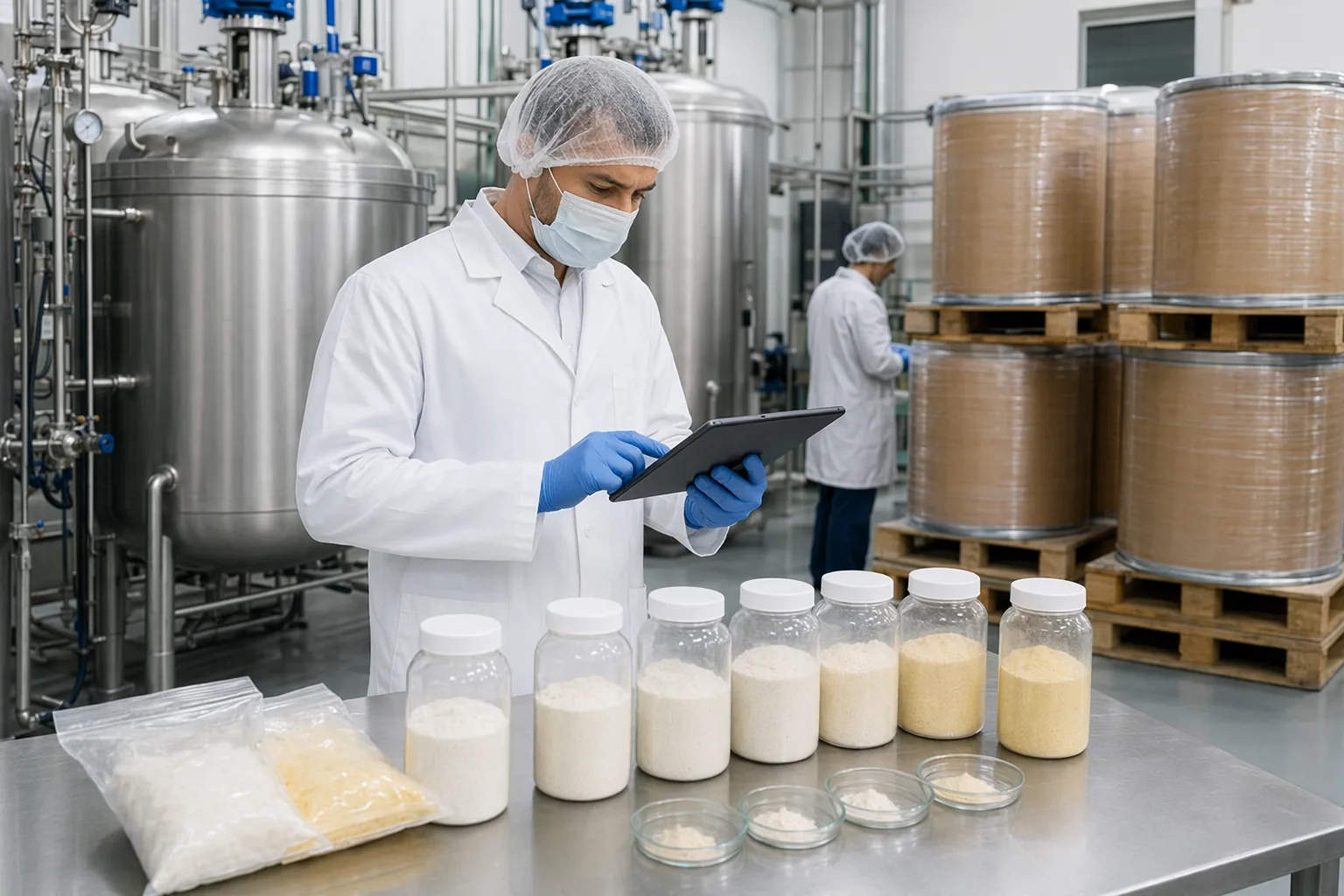
Source enzymes with confidence using practical specifications, validation steps, and supplier qualification criteria for B2B industrial purchasing.
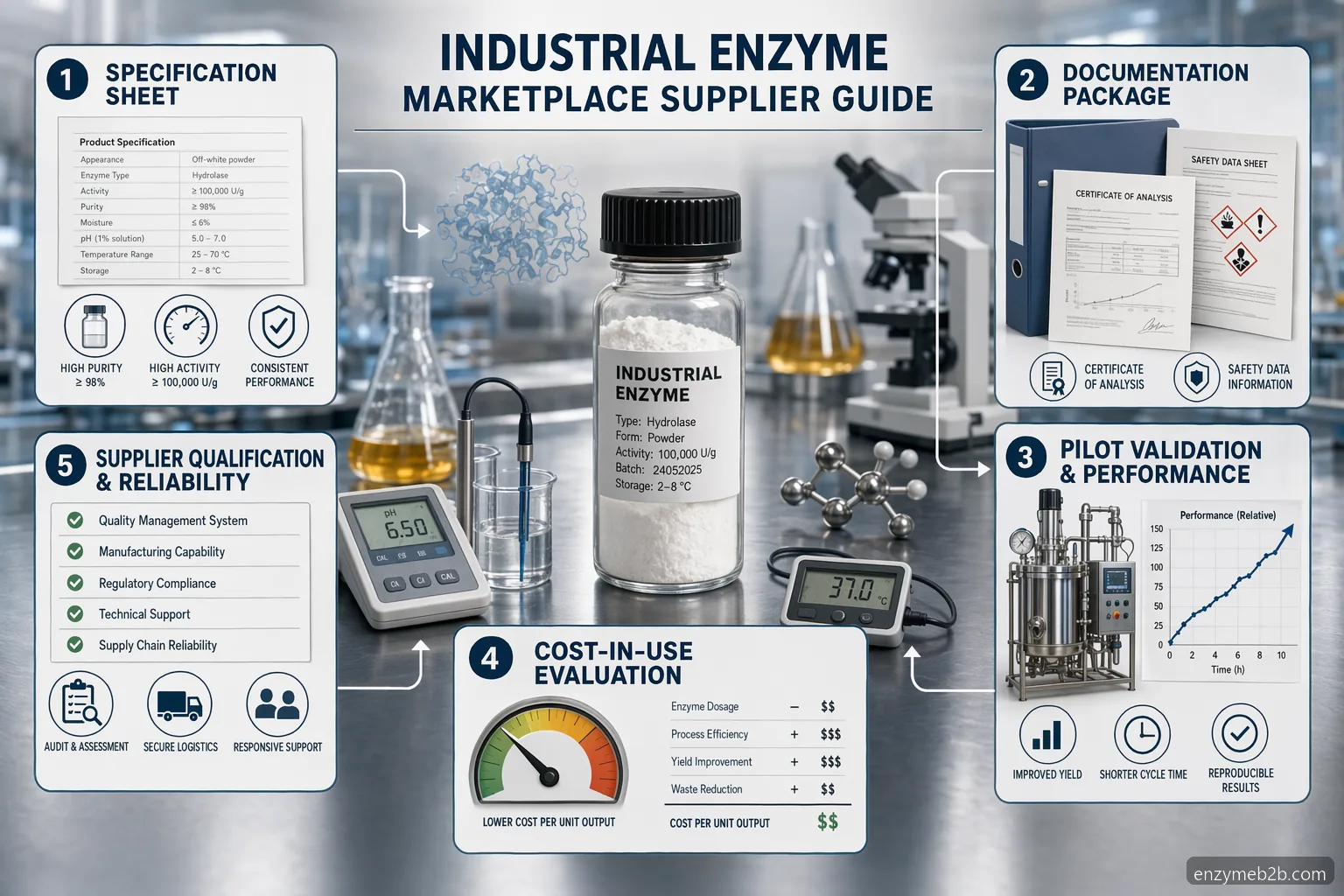
How to Compare an Enzymes Supplier for Industrial Use
Industrial buyers need more than a catalog listing when evaluating an enzymes supplier. The right supplier of enzymes should provide application fit, batch documentation, handling guidance, and realistic performance expectations under your operating conditions. Start by defining the substrate, target reaction, process pH, operating temperature, residence time, and downstream constraints. For many industrial enzymes, screening ranges may include pH 4.0–9.0 and temperatures from 30–70°C, depending on enzyme class and formulation. Ask whether the product is liquid, granulated, immobilized, or powder, because form affects dosing, dust control, stability, and mixing. For enzyme b2b procurement, request a technical data sheet, safety data sheet, certificate of analysis, and recommended storage conditions. A qualified industrial enzymes supplier should also discuss pilot testing, not just quote lead time and price.
Define the process goal before requesting quotes. • Compare activity units, not only package weight. • Check storage temperature and shelf-life requirements. • Confirm technical support for pilot validation.
Documentation Buyers Should Request Before Purchase
Before you buy enzymes online or through a direct sales channel, collect documents that support safe handling, quality review, and internal approval. A COA should identify batch number, activity specification, test method reference, manufacturing or release date, and acceptance limits. A TDS should describe intended industrial application, dosage guidance, pH and temperature ranges, physical form, storage, and compatibility notes. An SDS should address classification, exposure controls, personal protective equipment, spill response, and transport considerations. Food enzymes supplier inquiries may also require origin, allergen, or processing-aid statements depending on jurisdiction and application. For non-food industrial uses, confirm whether bioburden, heavy metals, carrier composition, or residual solvent data are relevant to your plant standards. Documentation quality often separates a transactional enzyme supplier from a dependable long-term manufacturing partner.
COA: batch activity, release criteria, and test basis. • TDS: application range, dosage, stability, and storage. • SDS: handling, PPE, spill, and transport information. • Statements: origin, allergen, or regulatory support where applicable.
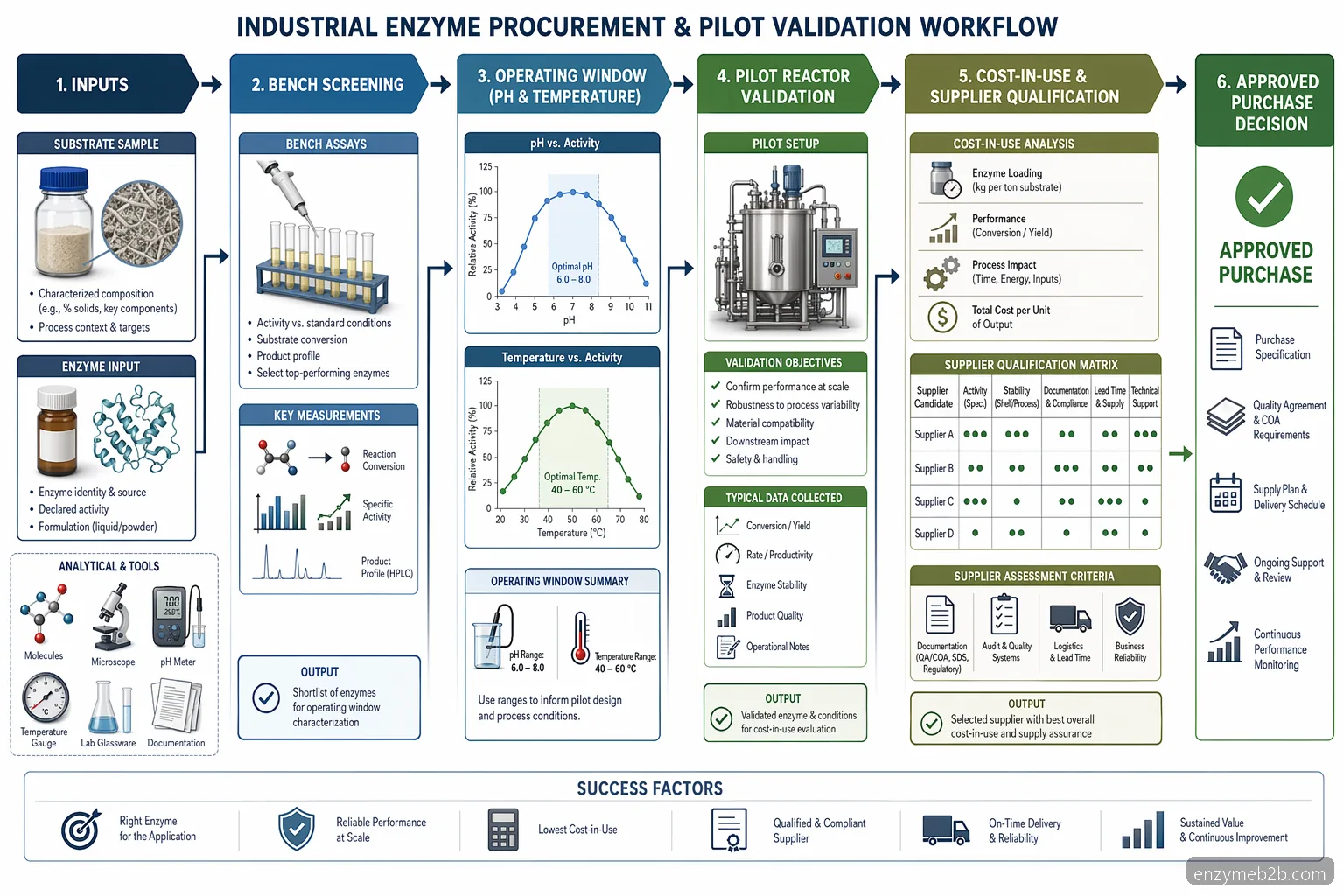
Pilot Validation and Cost-in-Use Evaluation
An enzyme with the lowest purchase price is not always the lowest-cost option. Industrial evaluation should measure cost-in-use: dosage, activity retention, cycle time, yield improvement, waste reduction, energy savings, and downstream impact. Typical screening may test dosage bands such as 0.01–0.50% on substrate weight, 50–2,000 ppm in liquid systems, or supplier-recommended activity units per kilogram of raw material. Run controls without enzyme, then test two or three dosage levels at your actual pH, temperature, mixing intensity, and hold time. Track endpoints such as viscosity drop, sugar release, protein hydrolysis, stain removal, filtration rate, conversion percentage, or cleaning time. A reliable industrial enzyme manufacturer or marketplace partner should help interpret results while avoiding unsupported guarantees. Pilot data should become the basis for specifications and purchase approval.
Use a no-enzyme control for every trial. • Measure process endpoints tied to plant economics. • Test realistic temperature, pH, and residence time. • Convert results into cost per finished unit.
Application Fit Across General Industrial Categories
General industrial enzyme sourcing includes food processing, bakery, brewing, textiles, pulp and paper, detergents, starch conversion, animal feed, waste treatment, and specialty bioprocessing. A bakery enzymes supplier may focus on dough handling, crumb softness, volume, and shelf-life effects, while a modifying enzymes supplier may support molecular biology, bioprocessing, or specialty synthesis workflows with tighter activity definitions. A vitamins enzymes supplier may serve nutraceutical ingredient production or formulation channels, but buyers should still separate industrial procurement from consumer supplement advice. Similarly, searches for a premium supplier of pancreatic enzymes for dogs may relate to veterinary product manufacturing or ingredient sourcing; this page does not provide medical or dosing guidance. The key is matching enzyme class—amylase, protease, lipase, cellulase, xylanase, pectinase, lactase, or others—to the industrial substrate and measurable process objective.
Amylases: starch liquefaction, saccharification, baking, brewing. • Proteases: protein hydrolysis, detergents, leather, feed. • Lipases: fats, oils, ester modification, cleaning. • Cellulases and xylanases: fiber modification and viscosity control.
Supplier Qualification for B2B Enzyme Procurement
Supplier qualification should combine technical, quality, commercial, and logistics review. Ask whether the supplier can provide consistent activity ranges, change notification for formulation or manufacturing changes, and traceability from batch to shipment. Confirm minimum order quantity, sample availability, lead time, temperature-controlled shipping needs, and packaging options that fit plant handling. For sensitive processes, request stability data under recommended storage and after opening. Buyers comparing an enzyme supplier, industrial enzyme manufacturer, or marketplace distributor should also evaluate response time, application knowledge, complaint handling, and willingness to support pilot trials. Avoid relying on broad claims such as “best” or “highest quality” without data. A practical qualification package includes COA/TDS/SDS review, pilot acceptance results, purchasing terms, approved specifications, and a plan for requalification if raw materials or process conditions change.
Document approved specifications and acceptance criteria. • Review traceability and change-control expectations. • Confirm logistics, packaging, and storage compatibility. • Set requalification triggers for process or supplier changes.
Technical Buying Checklist
Buyer Questions
Provide your substrate, process pH, temperature, hold time, target result, annual volume, packaging preference, and regulatory context. Ask for COA, TDS, SDS, activity units, dosage guidance, lead time, sample availability, and storage requirements. A strong enzyme supplier should help narrow options before pricing so you are comparing technically suitable products rather than generic enzyme categories.
Compare activity units, recommended dosage, stability, yield impact, and cost-in-use instead of price per kilogram alone. One product may cost more per package but require lower dosing or deliver faster conversion. Run small trials with the same substrate and operating conditions, then calculate cost per finished unit, including energy, labor, cycle time, waste, and downstream processing effects.
You can buy enzymes online for sampling or routine procurement if the supplier provides proper documentation and technical support. For production use, verify COA, TDS, SDS, lot traceability, storage conditions, and shipping controls. Pilot validation is still essential before plant adoption. Online ordering should support, not replace, supplier qualification and internal quality approval.
Receiving checks may include verifying batch number, COA match, package integrity, expiration or retest date, storage temperature on arrival, appearance, odor where appropriate, and activity confirmation if your lab has a validated method. For critical processes, retain samples and compare performance against an approved reference lot. Define rejection criteria before the first production shipment.
No. This page is for B2B industrial enzyme sourcing and process evaluation. It does not provide medical, veterinary, or supplement dosing advice. Searches such as vitamins enzymes supplier or premium supplier of pancreatic enzymes for dogs may involve regulated product categories, so buyers should follow applicable laws, product specifications, professional guidance, and quality requirements for their market.
Related Search Themes
enzyme supplier, vitamins enzymes supplier, bakery enzymes supplier, supplier of enzymes, premium supplier of pancreatic enzymes for dogs, modifying enzymes supplier
Industrial Enzymes (Wholesale) for Research & Industry
Need Industrial Enzymes (Wholesale) for your lab or production process?
ISO 9001 certified · Food-grade & research-grade · Ships to 80+ countries
Frequently Asked Questions
What should I ask an enzymes supplier before requesting a quote?
Provide your substrate, process pH, temperature, hold time, target result, annual volume, packaging preference, and regulatory context. Ask for COA, TDS, SDS, activity units, dosage guidance, lead time, sample availability, and storage requirements. A strong enzyme supplier should help narrow options before pricing so you are comparing technically suitable products rather than generic enzyme categories.
How do I compare two industrial enzyme quotations?
Compare activity units, recommended dosage, stability, yield impact, and cost-in-use instead of price per kilogram alone. One product may cost more per package but require lower dosing or deliver faster conversion. Run small trials with the same substrate and operating conditions, then calculate cost per finished unit, including energy, labor, cycle time, waste, and downstream processing effects.
Can I buy enzymes online for industrial production?
You can buy enzymes online for sampling or routine procurement if the supplier provides proper documentation and technical support. For production use, verify COA, TDS, SDS, lot traceability, storage conditions, and shipping controls. Pilot validation is still essential before plant adoption. Online ordering should support, not replace, supplier qualification and internal quality approval.
What QC checks are useful in enzyme receiving inspection?
Receiving checks may include verifying batch number, COA match, package integrity, expiration or retest date, storage temperature on arrival, appearance, odor where appropriate, and activity confirmation if your lab has a validated method. For critical processes, retain samples and compare performance against an approved reference lot. Define rejection criteria before the first production shipment.
Is this guidance intended for medical or supplement use?
No. This page is for B2B industrial enzyme sourcing and process evaluation. It does not provide medical, veterinary, or supplement dosing advice. Searches such as vitamins enzymes supplier or premium supplier of pancreatic enzymes for dogs may involve regulated product categories, so buyers should follow applicable laws, product specifications, professional guidance, and quality requirements for their market.
Ready to source?
Turn This Guide Into a Supplier Brief Send your enzyme requirement and receive matched supplier options with documentation for review.
Contact Us to Contribute