Industrial Enzyme Suppliers: How to Read the Spec Sheet Before You Order
How to compare industrial enzyme suppliers: what the U/g activity figure means, label words to verify, eight label traps and a pre-order checklist. Qualify with COA/TDS/SDS.

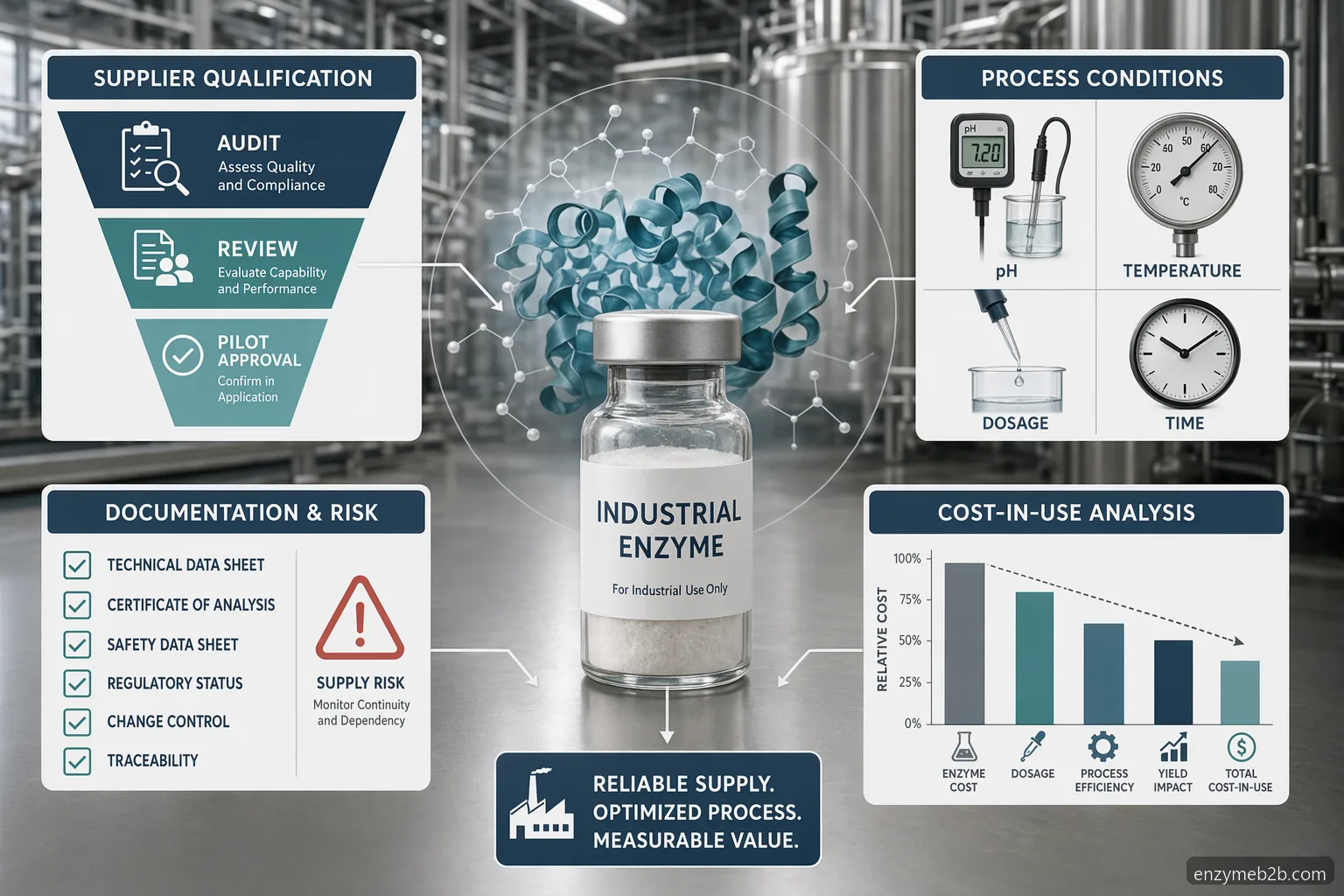
A quote that gives a price and a minimum order but no activity cannot be compared with anything, and a drum bought on that basis is how a plant ends up overdosing a weak grade or underdosing a strong one. This page is for the procurement or R&D lead at a food, feed, fertilizer or brewing plant who buys a few hundred kilograms to a few tonnes a year and wants quotes that can be laid side by side. The worked example throughout is the protein-splitting enzyme group, and to request a quote you send your process, pH, temperature, dose, quantity and destination country through the quote form on our home page or by email to hello@mail.enzymeb2b.com; we reply with a matching grade, pack and sample size.
What the activity number is telling you
Protease is offered from 4,000 to 400,000 U/g, a hundredfold spread under one product name. The grade word on the label may read food, detergent, industrial, brewing or feed, and many labels carry no grade word at all. A small distillery choosing an acid protease works from three things: the grade word, an activity of 100,000 U/g, and a minimum order of 1 kilogram. A mid-size feed operation sees roughly 50,000 U/g as the standard feed grade with 100,000 U/g and higher available, and a 1 kg trial bag at one end against a bulk tier that only starts at about 5,000 kg. Two products that print the same U/g figure but were measured by different methods are not the same strength, so ask which method and which substrate the number comes from.
Label word versus what to verify
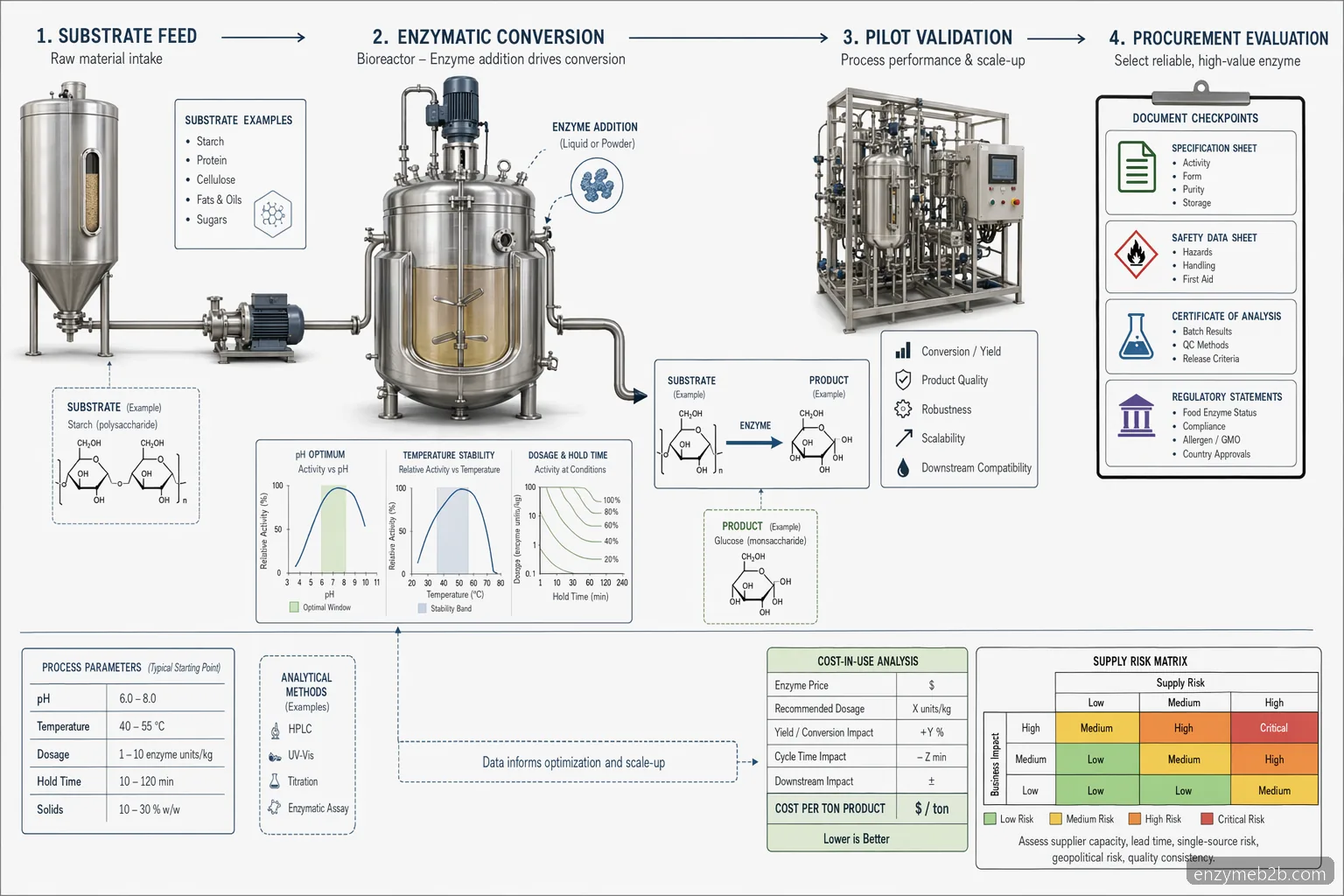
Each label word, with the values usually printed and what to verify before you order: Alkaline, neutral or acid: printed pH 7.0-11.0, 7.0-8.0 or 2.5-6.0; verify your process pH over the whole hold, not the printed optimum • Working temperature: most often printed as 50-55 C; verify activity left after your real hold time at your real temperature • Storage: printed 0-10 C, sealed, on an alkaline protease label; verify whether the quote includes cold-chain freight and what warm transit does to activity • Dosage: printed 0.1-0.3% or 0.2-1.0% of substrate; verify which activity grade that percentage was written for • Pack: printed 1 kg trial pack and 25 kg pack; verify which pack the quoted price and the printed numbers refer to • Shelf life: printed 12 months, sometimes 6 months; verify remaining life on the day of delivery, not from the production date • Application: one alkaline protease label lists detergent, leather, textile, protein hydrolysis, dehairing, gelatin and chondroitin extraction; verify the one application you have, proven in a trial on your substrate • Grade word: a dehairing protease can be described as a solid additive for food use, so read the application line, not the grade word
Eight label traps and the failure behind each
1. Grade word that contradicts the application: a dehairing enzyme for hides is also offered as a solid additive for food use, with "high activity, high stability" in its name. It comes in a 1 kg pack, so the mistake is cheap to make and expensive to scale.
2. One product for every industry: an alkaline protease from a Bacillus licheniformis strain, described as hydrolysing peptide bonds under alkaline conditions, is offered for washing, leather, textile, protein hydrolysis, dehairing, gelatin and chondroitin extraction on the same label. A product that claims every application has been optimised for none of yours, so ask for trial data on your substrate.
3. Price and minimum order without activity: feed proteases are quoted with minimum orders of 100 kg and 1000 kg and no U/g stated, which makes any cost-per-unit comparison impossible.
4. Trial pack mistaken for the bulk pack: the 1 kg bag is a trial size and the bulk tier begins near 5,000 kg, so confirm that the activity on the trial bag is the activity you will get in bulk.
5. Wrong species grade in feed: a plain monogastric enzyme premix of amylase and protease put into cattle or sheep feed can cause sub-acute rumen acidosis and protein waste rather than better conversion.
6. Same description, different fermentation: an endo-type protease sold to prevent cold haze in beer reaches the market under one description from more than one source, so ask for the strain and the activity per batch.
7. Standard grade forced onto a specific process: standard products often "do not adapt" to a given production process and cost the buyer rounds of trial and error, and a process cycle cut of ~40% is claimed for a matched enzyme-plus-culture blend. Treat that figure as a claim to test, and ask for a process-matched trial rather than a catalogue grade.
8. Blend bought by headline activity instead of by substrate: multi-enzyme cell-wall-breaking blends of protease, lipase, cellulase and amylase are sold for plant extraction, feed, fertilizer and food, and the reliable one is the one matched to your raw material.
Feed buyers: the two conditions the spec sheet must survive
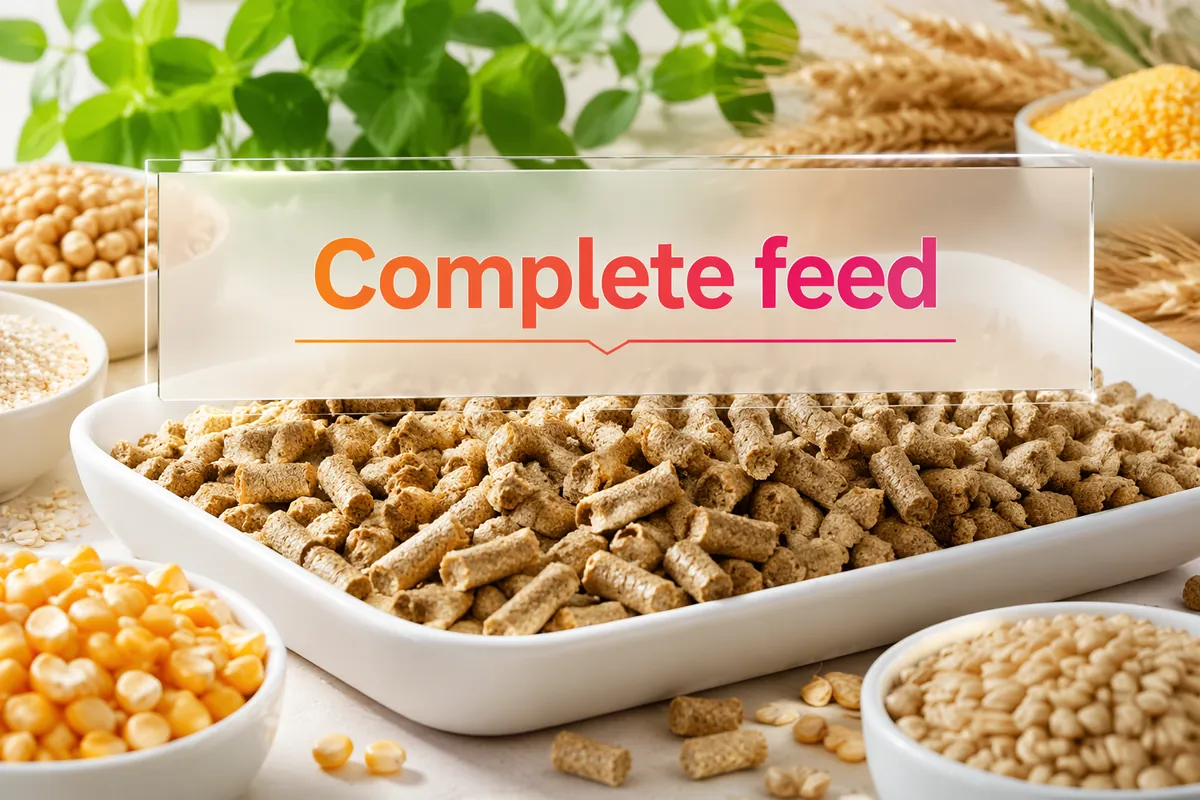
A feed protease has to keep working through two hostile steps: the pig stomach, where pH drops to 2.0-2.2, and the heat of pelleting. Passing one does not mean passing the other: an engineered serine protease held 60 kU/mL at pH 2.0 against 18 kU/mL for the wild type, yet kept only ~10% of its activity at 50-60 C. Two doses are on record for feed: 500 g per 1000 kg of feed for a commercial poultry product, and 10-25 g per ton of complete feed for a concentrated grade. Those doses differ by more than tenfold, so the activity on the sheet, not the grams, is the unit you buy by.
The customs question to settle before you book freight
Food factories importing enzyme preparations have to decide whether the product enters under heading 3507 or as a food additive, and the class decides the paperwork; settling it after the shipment is booked is the wrong order. Ask which heading the product ships under and what the declaration will say, and have your broker confirm it before the purchase order, not after.
Pre-order checklist and the first email
1. Activity in U/g with the assay method and substrate named, and whether the figure is a minimum or a typical value; the full range runs from 4,000 to 400,000 U/g.
2. Variant and pH window, written as a range you can test: 7.0-11.0, 7.0-8.0 and 2.5-6.0 are the three windows printed most often.
3. Temperature window and the activity left after your hold time; 50-55 C is the commonest printed window.
4. The recommended dose for the quoted grade, with the printed 0.1-0.3% or 0.2-1.0% of substrate as a starting point only.
5. Which pack the quote describes, trial 1 kg or 25 kg, and the shelf life on delivery against the printed 12 months or 6 months.
6. For feed, the acid and pelleting stability, with numbers: the activity left at pH 2.0-2.2 and after the heat of pelleting.
7. Which customs heading the product ships under, 3507 or additive, and what the declaration will say.
Buyers of this enzyme group rarely order it alone: laundry, seasoning and feed are the commonest uses, and beta-glucanase, alpha-amylase and lipase often ride in the same order, so give the whole blend and its pH in the email, not one enzyme. The first email can be short: your substrate, process pH and temperature, hold time, batch size, the dose you use today if any, the pack you want quoted and your destination country.
Next step
Email us your target pH, temperature, dose and process, and we reply with a matching grade, pack and sample size, with the seven checklist answers filled in for that grade. If you already hold quotes, send them as they are and we will tell you which numbers are missing before you order.
Industrial Enzymes (Wholesale) for Research & Industry
Need Industrial Enzymes (Wholesale) for your lab or production process?
ISO 9001 certified · Food-grade & research-grade · Ships to 80+ countries
Frequently Asked Questions
How do I choose the right enzyme supplier for an industrial process?
Start by defining the application, substrate, target result, pH, temperature, dosage expectations, and documentation needs. Then compare suppliers by enzyme type, activity units, grade, technical support, lead time, and batch consistency. Request COA, TDS, and SDS before approval. The best enzyme supplier is the one that performs consistently in your process at the lowest validated cost-in-use.
What should be included in an enzyme supplier quote request?
An enzyme supplier quote request should include enzyme type, application, expected annual volume, sample quantity, delivery location, preferred packaging, target pH and temperature, substrate details, required documents, and any food grade, kosher, halal, or regulatory needs. Ask for activity units, MOQ, shelf life, lead time, freight terms, and technical support availability so quotes can be compared fairly.
How should I evaluate a protease enzyme supplier?
For a protease enzyme supplier, confirm whether the protease is acidic, neutral, or alkaline and test it against your actual protein substrate. Review activity method, pH range, temperature range, microbial limits, allergen or carrier details, and inactivation guidance. For food processing, verify food grade status and any required documentation. Pilot trials should measure hydrolysis, bitterness, viscosity, yield, or other application-specific outcomes.
Are kosher and halal enzyme documents always available?
No. A kosher halal enzyme supplier may offer documentation only for specific products, sites, or lots. Buyers should request current certificates or statements that clearly match the enzyme grade being purchased. Do not assume a full product family is covered. If the finished product depends on kosher or halal status, include this requirement during initial sourcing and confirm it before sampling or production approval.
Why is cost-in-use better than price per kilogram?
Price per kilogram can be misleading because enzyme products vary in activity, stability, purity, carrier content, and effective dosage. A higher priced high activity enzyme supplier may deliver a lower batch cost if less material is needed or processing time is reduced. Cost-in-use should include dosage, yield, processing time, waste, freight, shelf life, and quality risk confirmed through pilot validation.
Which enzyme group fits which process?
Match the enzyme class to the substrate and the result you measure. Amylases: starch liquefaction, saccharification, baking and brewing. Proteases: protein hydrolysis, detergents, leather and feed. Lipases: fats and oils, ester modification and cleaning. Cellulases and xylanases: fibre modification and viscosity control. Pectinases: fruit and juice processing. On a mixed order, list each enzyme with the process it goes into.
What QC checks are useful in enzyme receiving inspection?
Receiving checks may include verifying batch number, COA match, package integrity, expiration or retest date, storage temperature on arrival, appearance, odor where appropriate, and activity confirmation if your lab has a validated method. For critical processes, retain samples and compare performance against an approved reference lot. Define rejection criteria before the first production shipment.
Request a quote
Turn This Guide Into a Supplier Brief Request matched enzyme supplier quotes with COA, TDS, SDS, and pilot sample options.
Contact Us to Contributehello@mail.enzymeb2b.com