Enzyme Supplier Quote for General Industrial Applications
Request an enzyme supplier quote with pH, temperature, dosage, COA/TDS/SDS, pilot validation, cost-in-use, and qualification checks.
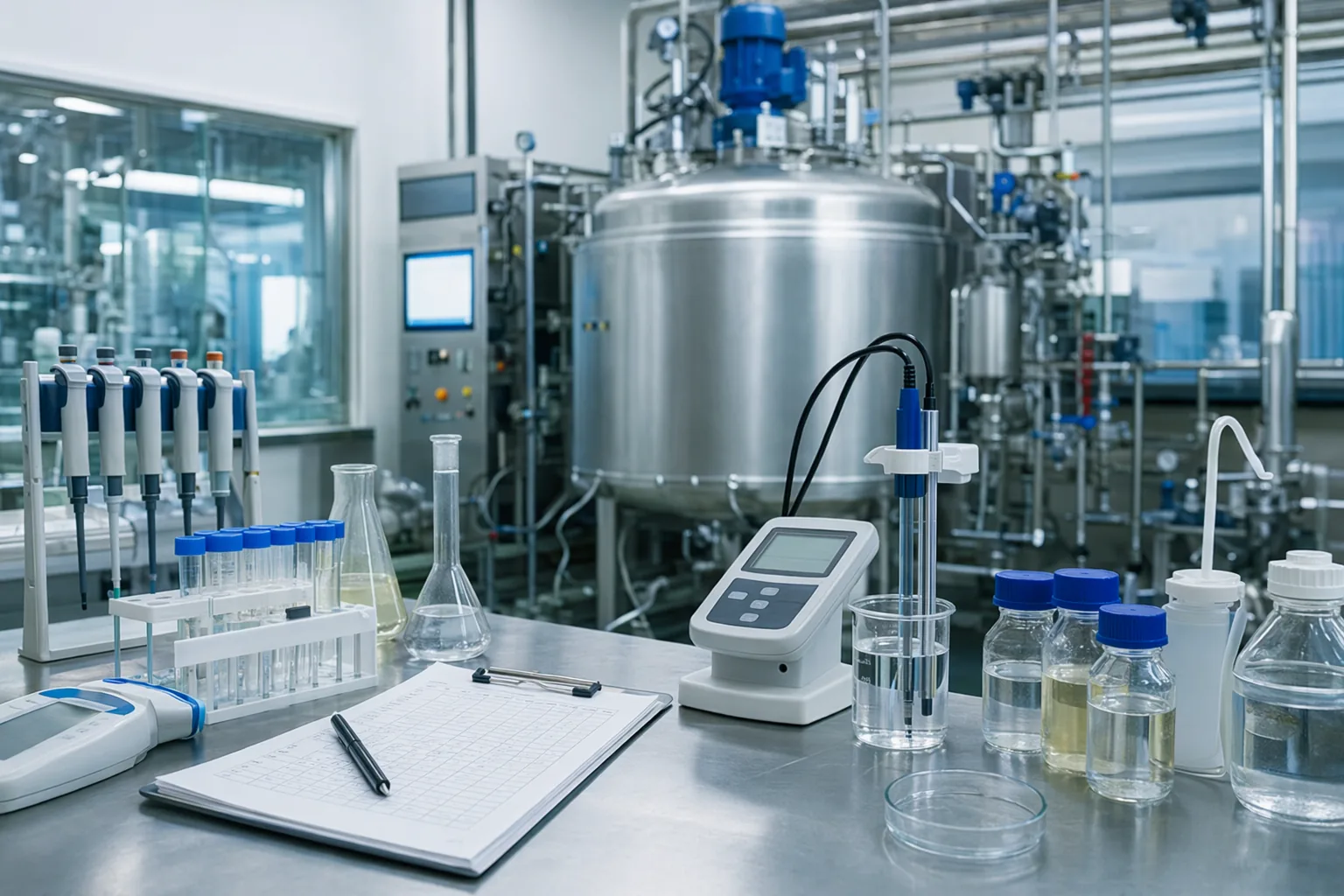
Use EnzymeB2B to turn process problems into a clear enzyme supplier quote request, with the right activity, dosage, pH, temperature, and documentation for industrial buying.
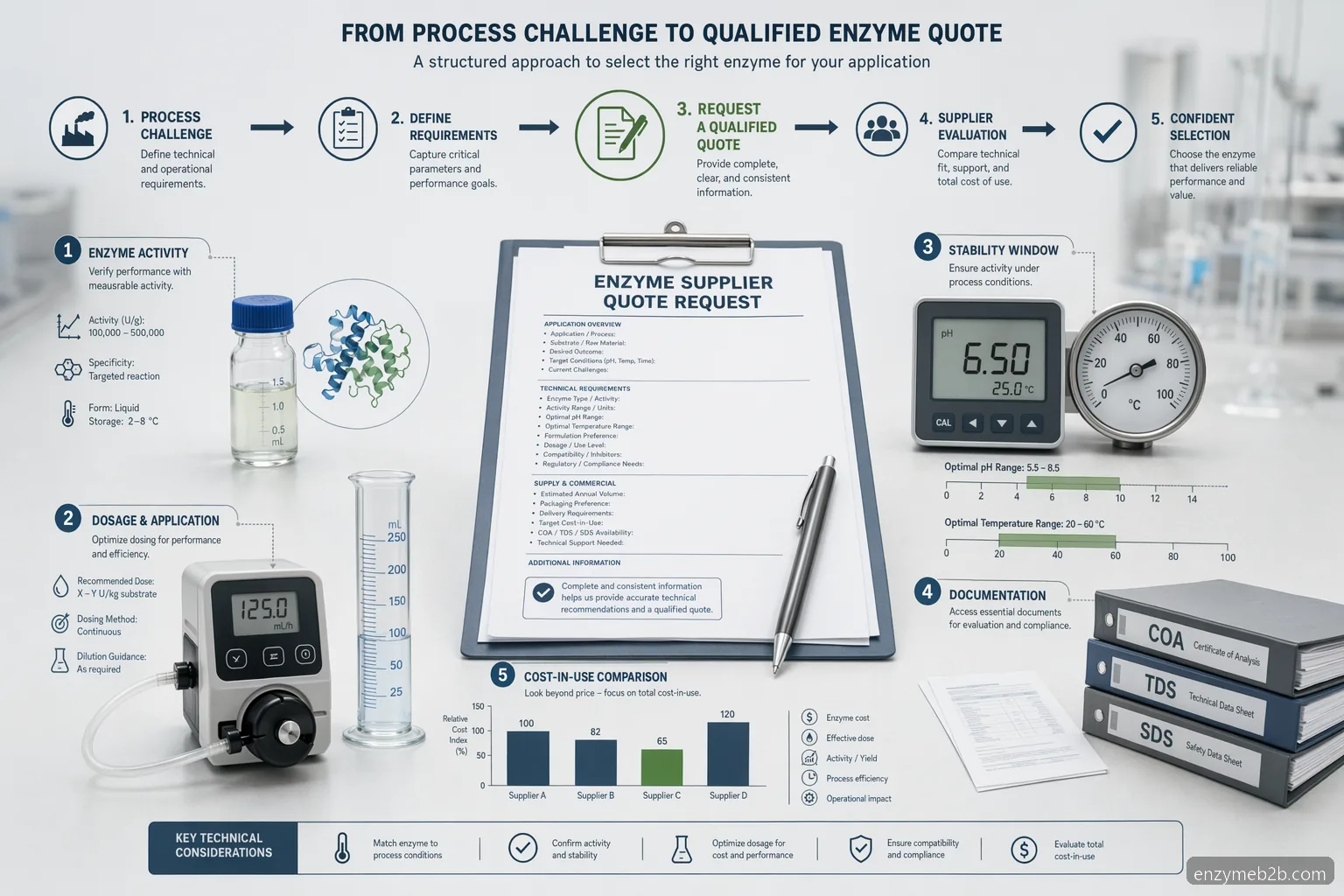
What to Include in an Enzyme Supplier Quote Request
A useful enzyme supplier quote starts with process data, not just an enzyme name. For general industrial use, describe the substrate, target reaction, batch or continuous operation, available mixing, residence time, and any downstream heat kill or filtration step. Include your current pain point, such as slow conversion, high viscosity, incomplete protein hydrolysis, starch carryover, fiber loss, foaming, odor, or yield variability. If you need a protease enzyme supplier, amylase supplier, lipase supplier, or enzyme ingredient supplier, state the required format: liquid, powder, granulate, or immobilized preparation. Buyers requesting a food grade protease enzyme supplier USA should also specify food-contact expectations and documentation needs. A complete enzyme supplier quote request helps technical teams recommend a realistic dosage band, sample size, and validation plan instead of sending a generic catalog item.
Substrate type and solids level • Operating pH and temperature range • Target activity unit and assay method, if known • Batch size, annual volume, and delivery location • Required COA, TDS, SDS, kosher, halal, or food-grade documentation
Troubleshooting Dosage Before You Buy Enzymes Online
Dosage is usually optimized by activity, substrate load, and contact time. Many industrial trials begin with a broad screening band such as 0.01% to 0.5% enzyme product by substrate weight, or 50 to 2,000 activity units per gram of substrate, then narrow the range using conversion data. A high activity enzyme supplier may offer a concentrated product that reduces freight and handling, but the best choice depends on cost-in-use, stability, and ease of dosing. Overdosing can create unnecessary cost, excessive hydrolysis, flavor or odor issues in food processes, or difficult downstream separation. Underdosing can cause incomplete conversion and long cycle times. Always run a no-enzyme control, a current-product benchmark, and at least three dosage points under the same pH, temperature, and mixing conditions.
Start with a low, medium, and high dosage screen • Measure both conversion and negative side effects • Normalize results by declared activity, not only weight • Confirm pumpability or dispersion at plant temperature
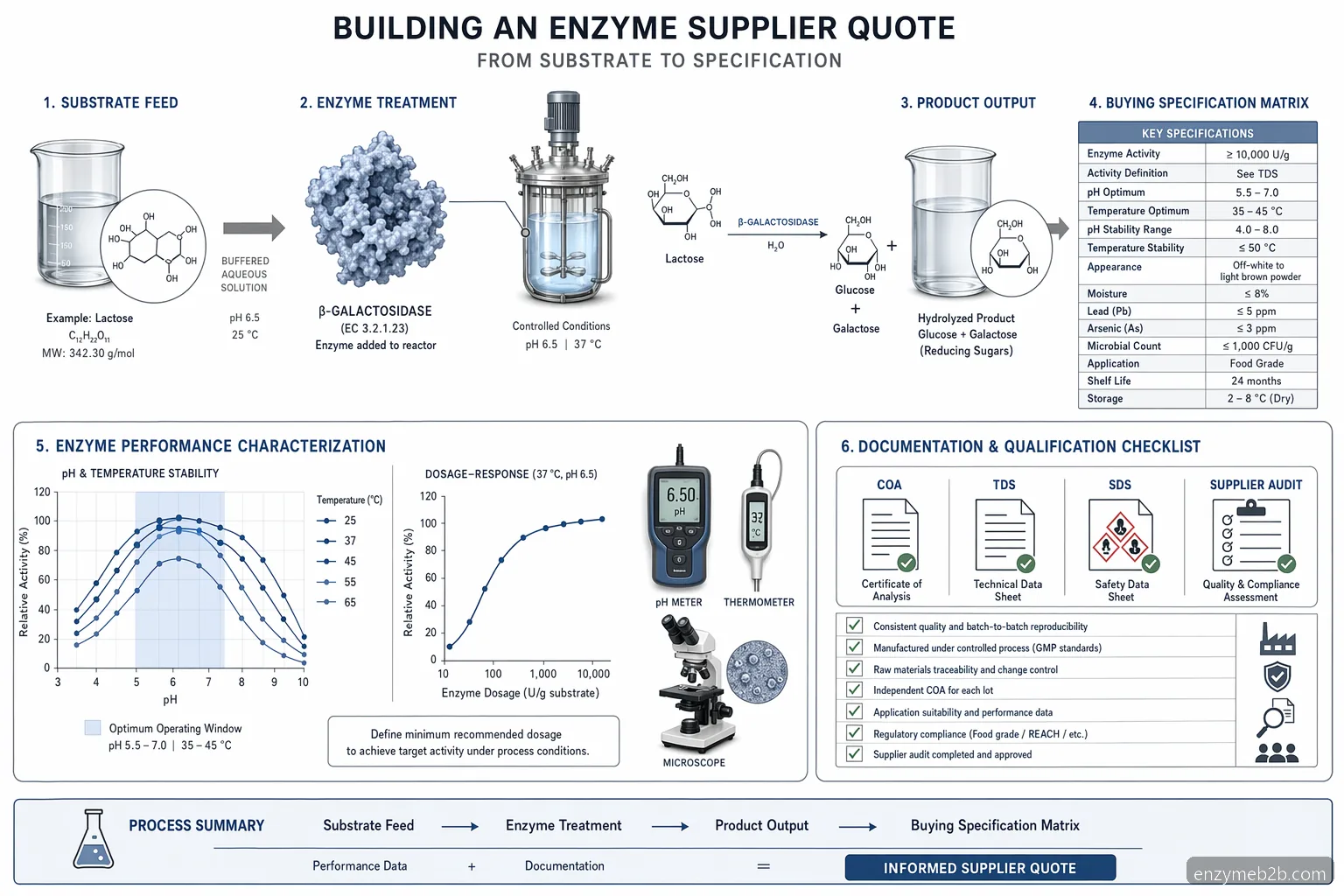
Match pH and Temperature to Enzyme Stability
Most enzyme troubleshooting begins with pH and temperature because activity and stability can change sharply outside the optimum range. Neutral proteases often perform around pH 6.0 to 8.0, alkaline proteases around pH 8.0 to 11.0, many fungal amylases around pH 4.5 to 6.0, and many bacterial amylases around pH 5.5 to 7.0, though supplier data must confirm the exact profile. Typical operating temperatures may range from 30°C to 65°C for many liquid processes, while some thermostable preparations tolerate higher temperatures for short residence times. Ask the enzyme supplier for activity curves, thermal stability data, and recommended inactivation conditions. If your process has pH swings, salts, solvents, oxidants, chelators, or surfactants, include them in the quote request because compatibility can determine whether the enzyme works at scale.
Check activity at actual process pH, not buffer-only conditions • Validate hold-time stability at operating temperature • Confirm compatibility with cleaners, salts, preservatives, or surfactants • Plan heat, pH, or chemical inactivation when required
COA, TDS, SDS, and Supplier Qualification
A qualified enzyme supplier should provide documentation appropriate to the application and market. At minimum, request a certificate of analysis with lot number, declared activity, appearance, microbiological limits where relevant, and release date. The technical data sheet should describe enzyme source, activity definition, recommended pH and temperature, storage, shelf life, handling, and dosage guidance. The safety data sheet should support plant EHS review, PPE selection, dust or aerosol controls, and spill procedures. If you need a kosher halal enzyme supplier, request current documentation from the supplier rather than assuming eligibility. For food, feed, textile, detergent, pulp, biofuel, or other industrial uses, qualification may also include traceability, change control, allergen statements, country of origin, packaging specifications, and audit readiness.
COA for each production lot • TDS with activity definition and use conditions • SDS for EHS and warehouse review • Change notification and traceability expectations • Application-specific regulatory or dietary documentation
Compare Cost-in-Use Across Enzyme Suppliers
The lowest unit price rarely identifies the best enzyme supplier. Compare cost-in-use by calculating dosage per metric ton of substrate, activity delivered, conversion yield, cycle time reduction, waste reduction, and any impact on energy, water, filtration, or rework. A concentrated liquid may cost more per kilogram but reduce drum handling and storage. A powder may offer better shelf life but require dust controls and dispersion validation. When comparing an enzyme vitamin supplier or ingredient distributor with a direct industrial enzyme manufacturer, confirm whether technical support, application testing, and lot-to-lot consistency are included. Before issuing a production purchase order, run pilot validation at realistic scale and collect QC data such as residual substrate, viscosity, degree of hydrolysis, protein solubility, Brix, turbidity, particle size, or final yield.
Calculate enzyme cost per finished unit • Include yield, time, energy, and waste impacts • Compare shelf life and storage temperature • Validate performance with pilot or plant trial data
Technical Buying Checklist
Buyer Questions
List the substrate, process pH, temperature, residence time, batch size, annual volume, target outcome, and current problem. Add required format, packaging, delivery location, and documents such as COA, TDS, and SDS. If you need kosher, halal, or food-grade documentation, state it clearly. A detailed enzyme supplier quote request allows suppliers to recommend dosage, sample size, and pilot conditions.
Use the supplier’s recommendation when available, then run a controlled screen. A practical starting range is often 0.01% to 0.5% enzyme product by substrate weight, or a band based on declared activity units. Include a no-enzyme control and a current-product benchmark. Measure conversion, side effects, and cost-in-use before selecting the production dosage.
Normalize both quotes by activity delivered under your process conditions. A high activity enzyme supplier may reduce dosage, freight, storage, and handling, but only if the activity remains stable at your pH and temperature. Compare cost per finished unit, not only cost per kilogram. Pilot validation should confirm yield, cycle time, downstream processing, and final product quality.
Request current kosher or halal documentation from the supplier or certifying body, plus the standard COA, TDS, and SDS. Confirm that the documentation matches the exact product, manufacturing site, and intended application. Do not assume that all enzymes from a supplier carry the same status. For food or ingredient use, also request traceability and change notification terms.
You can buy enzymes online for sampling or procurement, but industrial production should still include technical review, documentation, and pilot validation. Confirm enzyme class, activity, pH and temperature range, storage, shelf life, EHS handling, and lot release criteria. For regulated or food-contact applications, qualify the enzyme ingredient supplier before scale-up and keep approved specifications on file.
Industrial Enzymes (Wholesale) for Research & Industry
Need Industrial Enzymes (Wholesale) for your lab or production process?
ISO 9001 certified · Food-grade & research-grade · Ships to 80+ countries
Frequently Asked Questions
How do I prepare an enzyme supplier quote request?
List the substrate, process pH, temperature, residence time, batch size, annual volume, target outcome, and current problem. Add required format, packaging, delivery location, and documents such as COA, TDS, and SDS. If you need kosher, halal, or food-grade documentation, state it clearly. A detailed enzyme supplier quote request allows suppliers to recommend dosage, sample size, and pilot conditions.
What dosage should I test for a new industrial enzyme?
Use the supplier’s recommendation when available, then run a controlled screen. A practical starting range is often 0.01% to 0.5% enzyme product by substrate weight, or a band based on declared activity units. Include a no-enzyme control and a current-product benchmark. Measure conversion, side effects, and cost-in-use before selecting the production dosage.
How should I compare a high activity enzyme supplier with a lower-cost option?
Normalize both quotes by activity delivered under your process conditions. A high activity enzyme supplier may reduce dosage, freight, storage, and handling, but only if the activity remains stable at your pH and temperature. Compare cost per finished unit, not only cost per kilogram. Pilot validation should confirm yield, cycle time, downstream processing, and final product quality.
What documents should a kosher halal enzyme supplier provide?
Request current kosher or halal documentation from the supplier or certifying body, plus the standard COA, TDS, and SDS. Confirm that the documentation matches the exact product, manufacturing site, and intended application. Do not assume that all enzymes from a supplier carry the same status. For food or ingredient use, also request traceability and change notification terms.
Can I buy enzymes online for industrial production?
You can buy enzymes online for sampling or procurement, but industrial production should still include technical review, documentation, and pilot validation. Confirm enzyme class, activity, pH and temperature range, storage, shelf life, EHS handling, and lot release criteria. For regulated or food-contact applications, qualify the enzyme ingredient supplier before scale-up and keep approved specifications on file.
Ready to source?
Turn This Guide Into a Supplier Brief Request an enzyme supplier quote on EnzymeB2B with your process conditions, documentation needs, and pilot volume.
Contact Us to Contribute